search
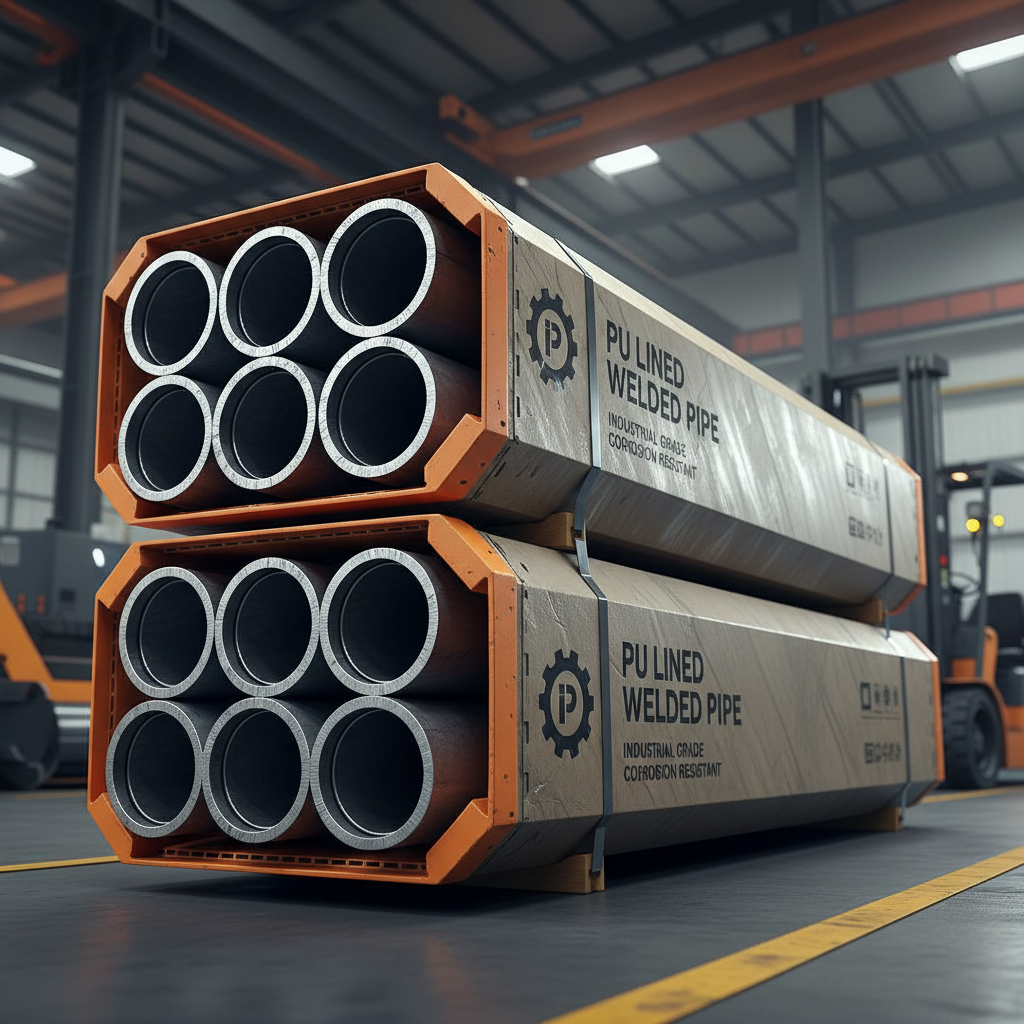
When managing abrasive slurry transport or corrosive chemical pipelines, the recurring cost of pipe replacement often becomes a primary operational bottleneck. For procurement managers in the mining and chemical sectors, the search for a reliable pu lined pipe factory direct supply is not just about reducing the unit price, but about securing a product that balances structural steel strength with the extreme wear resistance of high-grade polyurethane.
The technical challenge lies in the bonding interface between the metal exterior and the polymer interior. A failure in this bond leads to liner collapse or "vacuuming," which can cause catastrophic system downtime. By sourcing directly from a manufacturer specializing in metal and plastic integration, companies can ensure that the lining process meets rigorous industrial standards, reducing the risks associated with third-party intermediaries and inconsistent quality control.
This analysis examines the engineering logic behind polyurethane lining, the critical selection criteria for industrial piping, and how pu lined pipe factory direct supply enables enterprises to optimize their lifecycle costs through superior abrasion resistance and direct technical support.


Polyurethane (PU) lined pipes are composite structures designed to combine the mechanical rigidity of steel with the exceptional elasticity and abrasion resistance of polyurethane. The outer steel shell provides the necessary pressure rating and structural integrity to withstand external loads and high-pressure fluid transport, while the internal PU layer acts as a sacrificial and protective barrier against the erosive forces of particulate-laden media.
The effectiveness of these pipes depends heavily on the bonding technology used during manufacturing. Unlike simple slip-on liners, professional-grade PU lining involves a thermal or chemical bonding process that ensures the polymer adheres tightly to the steel wall. This prevents the formation of gaps where corrosive fluids could seep through and attack the outer steel shell, a common failure mode in poorly manufactured lined pipes.
When evaluating the suitability of PU lined pipes, the hardness of the polyurethane is the most critical variable. Measured on the Shore A or Shore D scale, hardness determines the trade-off between impact resistance and abrasion resistance. Softer PU typically handles larger particle impacts better, while harder PU is superior for fine-particle high-velocity erosion.
The core technical advantage of polyurethane is its ability to absorb energy through elastic deformation, which allows the liner to "bounce back" after an impact rather than cracking or chipping, a property that makes it significantly more durable than ceramic or HDPE in specific slurry applications.
Furthermore, the chemical compatibility of the polymer must be matched to the transported medium. While PU is highly resistant to many oils and abrasion, it may not be suitable for all strong acids or alkalis. In such cases, comparing PU with PTFE or Rubber linings is necessary to prevent chemical degradation of the inner wall, which would lead to premature liner failure.
Sourcing through a pu lined pipe factory direct supply eliminates the "information gap" between the end-user's technical requirements and the production line. Direct communication with engineers allows for the customization of liner thickness and material hardness based on the specific slurry density and flow velocity of the project, rather than relying on generic stock sizes.
This direct approach also ensures transparency in quality control, particularly regarding the bonding tests and pressure testing of the steel shell. When a manufacturer handles the process from material selection to final testing, the accountability for the product's service life is centralized, significantly reducing the risk of premature failure and the associated cost of emergency replacements.
In the mining industry, PU lined pipes are indispensable for the transport of tailings and ore slurries. The constant friction of mineral particles against the pipe wall would erode standard carbon steel in a matter of weeks. PU lining extends this lifespan by several orders of magnitude, making it a cost-effective solution for long-distance slurry transport systems.
Beyond mining, these pipes are widely utilized in dredging operations and chemical processing where abrasive solids are suspended in liquid. The ability of the polyurethane to resist wear while maintaining a smooth internal surface helps minimize pressure drops and reduces the energy requirements for pumping, contributing to overall operational efficiency.
The evolution of polyurethane lining is moving toward "smart liners" and advanced hybrid materials. Research is focusing on integrating wear-sensing fibers into the PU matrix, which would allow operators to monitor liner thickness in real-time without shutting down the system, transitioning maintenance from a reactive to a predictive model.
Additionally, the development of high-temperature polyurethane is expanding the application range of these pipes. While traditional PU has thermal limits, new formulations are being engineered to maintain structural integrity and abrasion resistance at higher temperatures, potentially replacing rubber linings in specific industrial heat-exchange or processing loops.
Sustainability is also driving a shift toward more environmentally friendly curing agents in the PU production process. Manufacturers are increasingly adopting solvent-free systems to reduce VOC emissions during the lining process, aligning industrial production with stricter global environmental regulations.
One of the primary challenges in installing PU lined pipes is ensuring the integrity of the joints. Because the liner extends into the pipe end, improper welding of the outer steel shell can cause "burn-through" or thermal damage to the PU lining, creating a point of vulnerability where erosion can start.
To mitigate this, professional installers use specialized coupling systems or precise welding sequences that shield the lining from excessive heat. Regular inspection using ultrasonic testing can help detect delamination between the PU and steel before a complete failure occurs, allowing for localized repairs rather than full section replacements.
Maintenance schedules should be based on the actual volumetric throughput of the abrasive media. By tracking the total tons of material transported, engineers can estimate the remaining liner thickness more accurately than using a simple calendar-based approach, optimizing the timing of maintenance shutdowns.
| Material | Abrasion Resistance | Chemical Range | Impact Strength |
|---|---|---|---|
| Polyurethane | Excellent | Moderate | High |
| Ceramic | Extreme | High | Low |
| Rubber | Good | High | Very High |
| HDPE | Moderate | Very High | Moderate |
| PTFE | Low | Extreme | Low |
| Steel (Unlined) | Low | Low | High |
Polyurethane generally offers significantly higher abrasion resistance and tensile strength compared to rubber. While rubber is excellent for impact and certain chemical environments, PU is far superior in handling the sliding abrasion caused by fine particles in slurry, leading to a longer service life in mining and dredging applications.
Direct sourcing allows for precise technical customization of the PU hardness and liner thickness to match specific flow conditions. It also ensures that the buyer receives a product that has undergone direct factory quality testing for bonding and pressure, reducing the risk of intermediary errors and lowering the overall procurement cost.
Yes, because the pressure is borne by the outer steel shell, not the PU liner. The steel can be specified to any required pressure rating (e.g., Schedule 40, 80 or custom wall thickness). The PU liner serves only as the protective internal layer and does not contribute to the pressure rating of the pipe.
Delamination is usually caused by poor surface preparation of the steel before lining, incorrect curing temperatures, or extreme vacuum conditions inside the pipe. When the bond fails, fluid can enter the gap, causing the liner to collapse or "balloon," which eventually leads to a total failure of the internal protective layer.
The choice depends on the particle size of the abrasive. For larger, jagged particles that cause high-impact wear, a lower hardness (higher elasticity) is preferred to absorb the energy. For fine, sand-like particles causing sliding erosion, a higher hardness is required to prevent the material from being "scoured" away.
Maintenance should focus on joint inspections and monitoring flow rates. A decrease in flow or an increase in pump pressure often indicates liner wear or buildup. Using ultrasonic thickness gauges can help determine the remaining life of the liner without necessitating a full system teardown.
Selecting the right lining material is a critical decision that directly impacts the operational uptime and maintenance budget of any industrial fluid transport system. Polyurethane lined pipes provide a sophisticated balance of mechanical strength and wear resistance, effectively solving the dilemma of frequent pipe erosion in mining and chemical sectors. By understanding the relationship between polymer hardness and particle behavior, operators can significantly extend the lifecycle of their infrastructure.
For organizations seeking to optimize their piping systems, collaborating with a specialized manufacturer ensures that the technical specifications are perfectly aligned with the application's demands. To explore customized lining solutions or request technical consultations for your specific project, you are invited to visit the professional resources available at www.qwmetal.com.