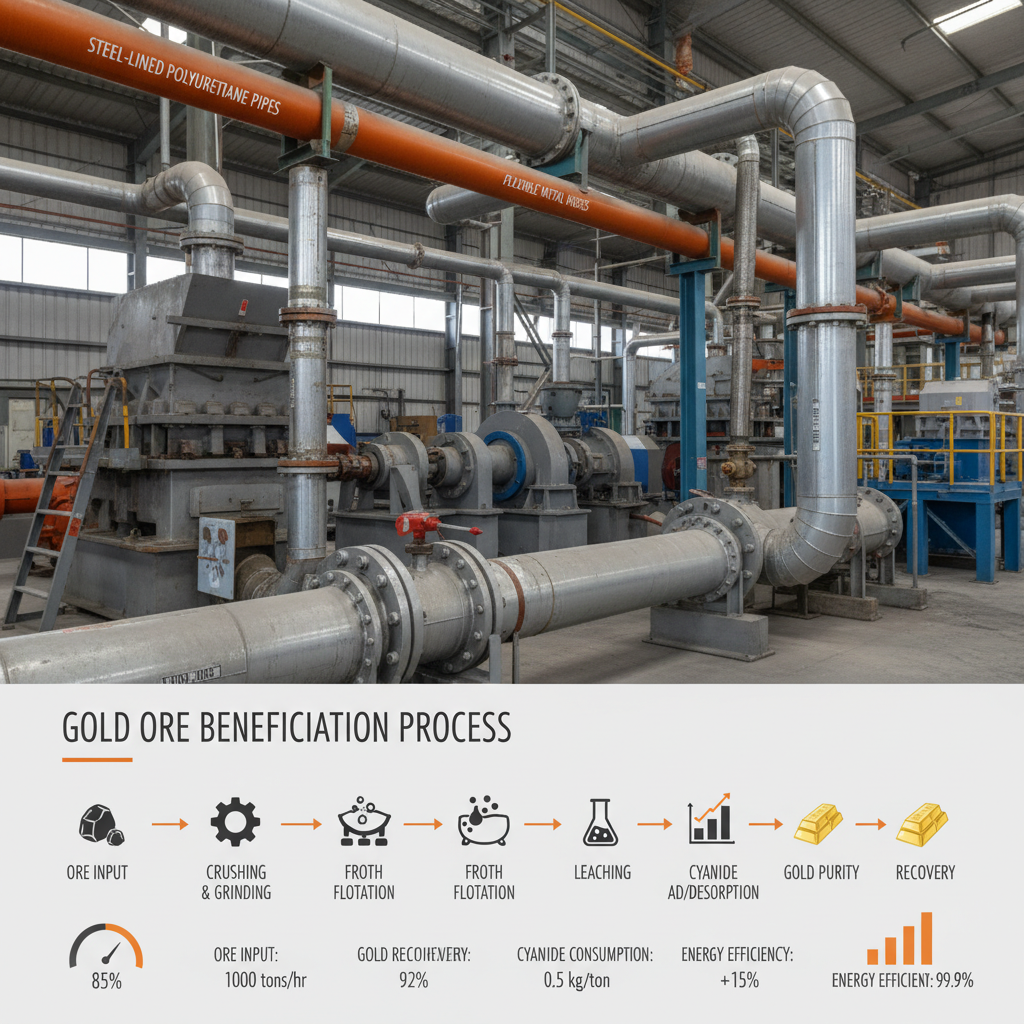
The beneficiation of gold ore is a crucial process in the mining industry, transforming raw, low-grade ore into a concentrated form suitable for further refining and extraction of the precious metal. This process isn't just about economic gain; it significantly impacts resource efficiency, reduces environmental impact compared to mining higher-grade ores, and supports sustainable gold production globally. Understanding the nuances of beneficiation is therefore vital for mining engineers, metallurgists, investors, and policymakers alike.
Globally, gold demand continues to rise, fueled by investment, jewelry fabrication, and industrial applications. However, high-grade gold ores are becoming increasingly scarce, making the effective beneficiation of lower-grade ores paramount. According to the World Gold Council, despite ongoing exploration, the average grade of newly discovered gold deposits is declining, highlighting the growing importance of optimizing beneficiation techniques. This necessitates advancements in technology and process control to maximize gold recovery and minimize waste.
The increasing scrutiny of mining operations by environmental and social governance (ESG) stakeholders also drives the need for more efficient beneficiation processes. Improved recovery rates translate to less land disturbance and reduced energy consumption, directly addressing concerns related to the environmental footprint of gold mining. Furthermore, effective beneficiation plays a role in responsible sourcing and minimizing the negative impacts on local communities.
Introduction to Beneficiation of Gold Ore
Beneficiation of gold ore refers to the suite of processes used to upgrade the concentration of gold in mined material. This often involves separating gold-bearing minerals from unwanted waste material (gangue). These methods are critical because gold is rarely found in a pure form; it typically occurs as microscopic particles disseminated within rock formations.
The selection of appropriate beneficiation techniques depends heavily on the ore's characteristics, including mineralogy, particle size distribution, and the presence of other valuable or deleterious elements. Effective beneficiation significantly reduces the volume of material requiring expensive and energy-intensive downstream processing, such as smelting or cyanidation, making gold extraction economically viable.
Defining Beneficiation of Gold Ore
In its simplest terms, beneficiation of gold ore is the concentration of valuable minerals – in this case, gold – from gangue. It’s a physical and chemical pre-treatment stage that prepares the ore for final gold extraction. It’s distinct from prospecting, which identifies potential gold-bearing locations, and extraction, which recovers the gold from the concentrated material. Beneficiation seeks to increase the head grade (the concentration of gold in the material fed to the extraction plant).
The connection to modern industry is direct. The efficiency of beneficiation directly impacts the profitability of gold mining operations. Furthermore, advancements in beneficiation technologies contribute to more environmentally responsible mining practices. Properly beneficiated ore requires less chemical reagent and energy for final gold recovery, reducing overall environmental impact.
Beneficiation techniques also find application beyond gold, serving as foundational principles in the processing of other valuable minerals like platinum group metals, rare earth elements, and base metals. The fundamental concepts of separation based on physical and chemical properties are universally applicable within the broader mining industry.
Key Factors in Gold Ore Beneficiation
Several key factors govern the success of gold ore beneficiation. These include the liberation size (the particle size at which gold is fully separated from the surrounding gangue), the relative density difference between gold and gangue minerals, the surface properties of the minerals, and the presence of other minerals that may hinder gold recovery. Understanding these factors allows for the selection of the most appropriate processing route.
Another critical factor is ore mineralogy. Different gold-bearing minerals (e.g., native gold, gold associated with pyrite or arsenopyrite) respond differently to various beneficiation techniques. For example, free-milling gold (native gold easily separated from the ore) requires less complex processing than gold locked within sulfide minerals, which may necessitate pre-treatment methods like oxidation or roasting.
Particle size distribution also plays a crucial role. Fine gold particles require different separation methods than coarse gold. Crushing and grinding circuits must be carefully optimized to achieve the desired particle size while minimizing gold losses. Furthermore, the presence of clay minerals can negatively affect beneficiation performance, requiring the addition of flocculants or other conditioning agents.
Global Applications of Beneficiation
Beneficiation of gold ore is practiced globally, with techniques tailored to the specific characteristics of local ore deposits. In South Africa, historically known for its deep-level gold mines, gravity concentration and flotation are commonly used to treat complex sulfide ores. In Australia, where gold is often found in alluvial deposits, simple gravity separation methods such as sluicing and jigging are widely employed.
In North America, both hard rock and placer gold deposits are beneficiated using a variety of techniques. Heap leaching, often preceded by crushing and grinding, is a prevalent method for processing low-grade ores. In South America, particularly in countries like Peru and Chile, beneficiation is crucial for processing complex porphyry-related gold deposits.
Even in remote industrial zones, beneficiation techniques are employed. For instance, in regions of Papua New Guinea, small-scale artisanal miners utilize rudimentary gravity concentration methods, although these often have environmental and social consequences. Improving these practices through training and technology transfer is vital for responsible gold production.
Comparison of Beneficiation of Gold Ore Methods
Advantages and Long-Term Value
The advantages of effective beneficiation of gold ore are multifaceted. Economically, it lowers processing costs by reducing the amount of ore that requires intensive downstream treatment. This translates to higher profit margins for mining companies. Environmentally, optimized beneficiation minimizes waste generation and reduces the demand for virgin ore, leading to a smaller environmental footprint.
Socially, responsible beneficiation practices support sustainable mining operations that provide long-term employment opportunities and contribute to local economic development. A commitment to safety and environmental stewardship builds trust with local communities and stakeholders. The long-term value lies in securing a sustainable supply of gold while minimizing the environmental and social costs associated with its production.
Future Trends and Innovation
The future of beneficiation of gold ore is focused on enhancing efficiency, sustainability, and automation. Emerging technologies like sensor-based sorting, which utilizes real-time mineralogical data to separate ore particles, are gaining traction. These technologies offer the potential to selectively recover gold with higher precision and minimize waste.
Digital transformation through the integration of data analytics, machine learning, and artificial intelligence is also playing a key role. AI-powered optimization algorithms can improve process control, predict equipment failures, and enhance overall plant performance. The growing emphasis on green energy and reducing carbon emissions is driving the development of more energy-efficient beneficiation techniques.
Challenges and Solutions
Despite advancements, challenges remain in the beneficiation of gold ore. Processing complex ores with finely disseminated gold presents a significant hurdle. Traditional methods often struggle to recover these fine particles efficiently. Another challenge is the presence of deleterious elements like arsenic or mercury, which require specialized treatment processes.
Innovative solutions include the development of novel leaching reagents that are more selective for gold and less harmful to the environment. Pre-concentration techniques, such as dense media separation and spirals, can reduce the volume of material requiring further processing. Furthermore, collaborative research between mining companies, universities, and technology providers is crucial for developing and implementing cutting-edge beneficiation technologies.
Optimizing water management is also critical, especially in arid regions. Implementing closed-loop water systems and utilizing water recycling technologies can minimize water consumption and reduce environmental impact. Addressing these challenges requires a holistic approach that considers both technical and environmental factors.
Summary of Challenges and Potential Solutions in Gold Ore Beneficiation
| Challenge |
Ore Type Affected |
Impact on Beneficiation |
Potential Solution |
| Fine Gold Liberation |
Porphyry Deposits, Refractory Ores |
Low Recovery Rates |
Enhanced Gravity Separation, Flotation with Fine Particle Collectors |
| Complex Mineralogy |
Sulfide Ores, Carbonaceous Ores |
Gold Encapsulation, Cyanide Consumption |
Pre-Oxidation, Bio-Oxidation, Pressure Oxidation |
| Deleterious Elements |
Arsenopyrite-Bearing Ores, Mercury-Rich Deposits |
Environmental Risks, Treatment Costs |
Selective Flotation, Chemical Precipitation, Stabilization |
| Water Scarcity |
Arid and Semi-Arid Regions |
Operational Constraints, Environmental Impact |
Water Recycling, Dry Stack Tailings, Alternative Water Sources |
| Energy Consumption |
All Ore Types |
High Operating Costs, Carbon Footprint |
Optimized Grinding Circuits, Energy-Efficient Equipment, Renewable Energy Sources |
| Tailings Management |
All Ore Types |
Environmental Liability, Land Use |
Dry Stack Tailings, Tailings Reprocessing, Geochemical Stabilization |
FAQS
The most prevalent methods include gravity concentration (for free gold), flotation (for sulfide-associated gold), cyanidation (for leaching gold), and increasingly, sensor-based sorting. The choice depends heavily on the ore’s mineralogy and gold’s liberation size. Often, a combination of these methods is employed to achieve optimal recovery. Understanding the specific characteristics of the ore deposit is paramount when selecting the appropriate beneficiation techniques. Pre-treatment steps, like comminution and classification, are also crucial for maximizing the effectiveness of these processes.
Ore mineralogy is a critical factor. The type of gold-bearing minerals (e.g., native gold, pyrite, arsenopyrite) significantly influences the choice of beneficiation techniques. For example, free-milling gold responds well to gravity concentration, while gold locked within sulfide minerals may require flotation or bio-oxidation prior to cyanidation. The presence of deleterious elements like arsenic also necessitates specialized treatment processes to prevent environmental contamination and ensure safe operation.
Environmental impacts are a major concern. Beneficiation processes can generate significant waste (tailings) containing potentially harmful chemicals. Key considerations include minimizing water consumption, preventing acid mine drainage, managing tailings safely, and reducing the use of hazardous reagents like cyanide. Sustainable beneficiation practices emphasize closed-loop water systems, tailings reprocessing, and the adoption of more environmentally friendly leaching agents.
Automation offers substantial improvements in efficiency and control. Automated control systems can optimize process parameters like grinding size, reagent dosage, and flotation conditions, leading to higher gold recovery and reduced reagent consumption. AI-powered systems can analyze real-time data to predict equipment failures and optimize plant performance. Automated sampling and assaying provide faster and more accurate data for process control.
Sensor-based sorting is a relatively new technology that uses sensors (e.g., X-ray, optical, laser) to identify and separate gold-bearing ore particles from waste material. It’s particularly effective for processing ores with variable gold grades. This technology can significantly reduce the volume of material sent to downstream processing, lowering costs and minimizing environmental impact. It’s a promising technology for pre-concentration, especially for lower-grade ores.
Gold particle size is a critical factor influencing recovery. Finer gold particles require different separation techniques compared to coarser particles. Gravity concentration is generally effective for coarser gold, while flotation and cyanidation are better suited for finer gold. Inefficient grinding can lead to gold losses if particles are either too coarse for effective separation or over-ground, creating slimes that hinder recovery. Achieving optimal particle size distribution is crucial for maximizing gold recovery.
Conclusion
The beneficiation of gold ore is a complex and critical process essential for maximizing gold recovery and minimizing the environmental impact of mining operations. From gravity concentration and flotation to innovative technologies like sensor-based sorting and AI-driven optimization, the field continues to evolve, driven by the need for greater efficiency, sustainability, and responsible resource management. Effective beneficiation directly influences the economic viability of gold projects and ensures a reliable supply of this valuable metal.
Looking forward, continued investment in research and development, coupled with a commitment to collaborative innovation, will be vital. Embracing digital transformation, prioritizing environmental stewardship, and fostering sustainable practices will be key to unlocking the full potential of gold ore beneficiation and ensuring a responsible and prosperous future for the gold mining industry. For expert solutions and advanced technologies in gold ore beneficiation, visit our website: https://www.qwmetal.com.