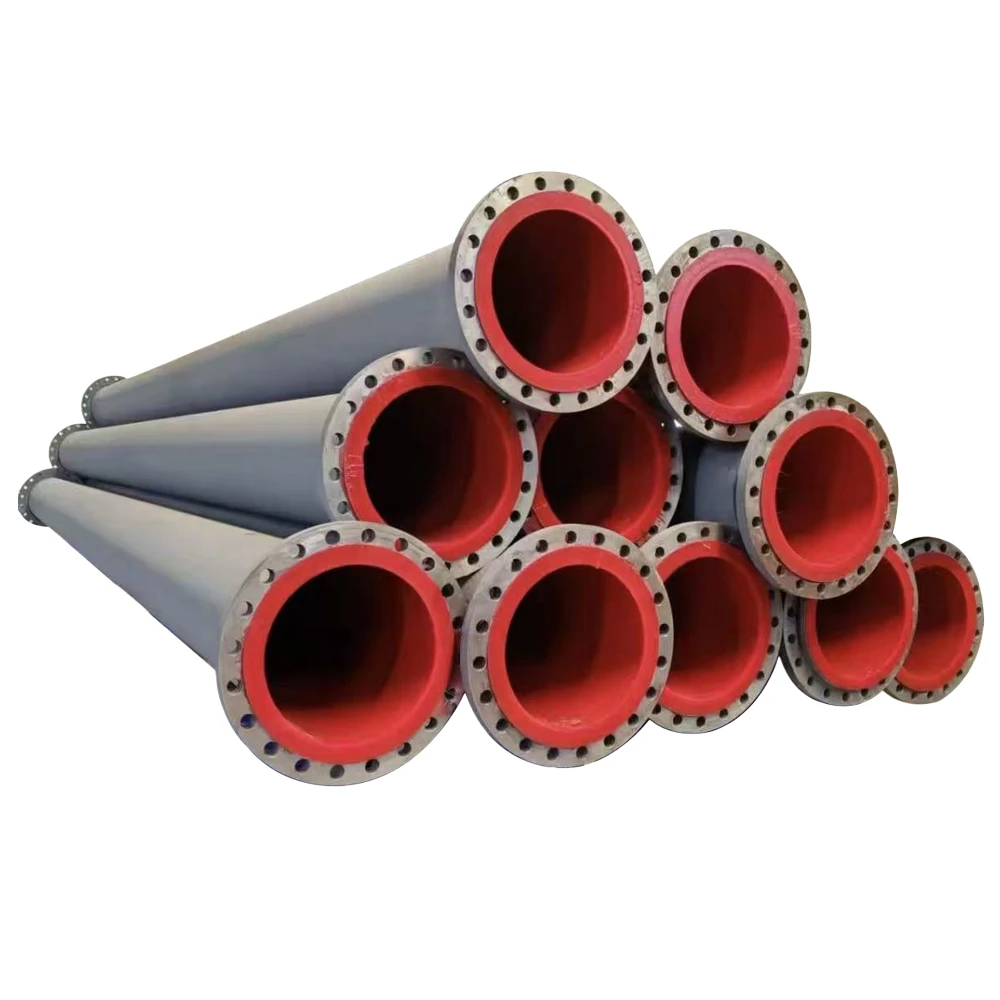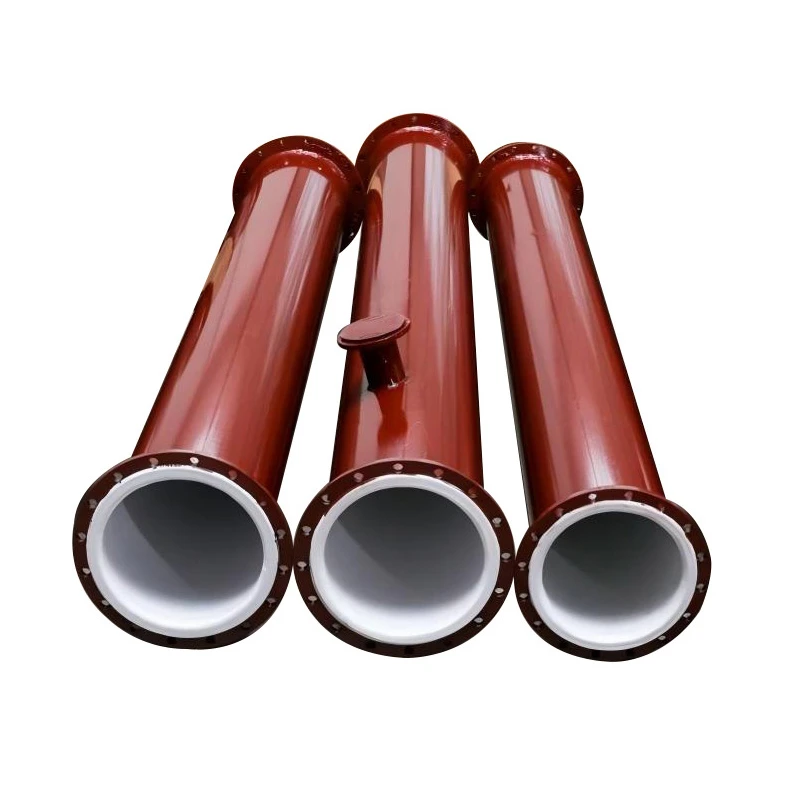

Polyurethane (PU) lining serves as a critical protective barrier for industrial piping systems subjected to extreme abrasive and corrosive environments. By integrating a high-performance polymer inner layer with a structural outer shell, industries can significantly extend the operational lifespan of their fluid and material transport systems. This article examines the technical requirements and fabrication nuances necessary to achieve optimal system reliability.
The demand for pu lined pipe custom fabrication arises from the limitations of standard steel piping, which often fails prematurely due to erosion and chemical attack. In sectors such as mining and chemical processing, the ability to customize the liner thickness and material grade is essential to balance flow efficiency with long-term durability, ensuring that the pipeline can withstand specific slurry densities and velocities.
Readers will gain a comprehensive understanding of the selection criteria for PU materials, the structural relationship between the lining and the steel host, and the critical quality checks required during procurement. By analyzing these engineering factors, procurement managers and project engineers can make informed decisions to reduce downtime and optimize the total cost of ownership for their pipeline infrastructure.
Engineering Foundations of Polyurethane Lining
The fundamental purpose of polyurethane lining is to decouple the structural load-bearing requirements of a pipeline from the surface-level resistance requirements. While carbon steel or stainless steel provides the necessary hoop strength to contain high-pressure media, the PU liner provides the "sacrificial" or resistant layer that interacts with the medium. Polyurethane is uniquely positioned for this role because it combines the elasticity of rubber with the hardness of plastic, allowing it to absorb the impact of large particles in a slurry without cracking or peeling. The efficacy of this system depends heavily on the bonding process; a failure in the adhesion between the PU and the steel can lead to "liner collapse," where the polymer detaches and obstructs the flow. Advanced fabrication techniques, involving specific primers and controlled thermal curing, are employed to ensure a chemical and mechanical bond that survives thermal expansion and contraction cycles. This structural synergy is what enables pipelines to operate in harsh industrial environments for years without requiring internal replacement.
Technical Execution and Selection Guide
Designing a custom-lined piping system requires a detailed analysis of the operating medium, the pressure gradients, and the environmental conditions. The following sections detail the critical dimensions of fabrication and selection.
Material Synergy and Bonding
The relationship between the polyurethane liner and the steel outer shell is the most critical point of failure. Proper fabrication requires the steel surface to be grit-blasted to a specific profile to increase the surface area for bonding. The PU is then applied, often through centrifugal casting or extrusion, and cured under precise temperature controls to prevent internal stress. This ensures the liner remains concentric and securely attached even under vacuum conditions.
| Bonding Factor | Requirement | Risk of Failure | Evaluation Method |
|---|---|---|---|
| Surface Roughness | Sa 2.5 Grit Blast | Delamination | Visual/Profilometer |
| Curing Temp | Controlled Thermal Cycle | Internal Voids | Hardness Testing |
| Liner Concentricity | ±0.5mm Tolerance | Uneven Wear | Ultrasonic Gauging |
| Adhesive Layer | Polyurethane Primer | Chemical Seepage | Pull-off Test |
| Material Grade | Shore A 80-95 Hardness | Rapid Erosion | Durometer Test |
| Joint Sealing | Seamless Fusion | Leakage at Welds | Hydrostatic Test |
Customization Parameters
Custom fabrication allows for the optimization of liner thickness based on the expected wear rate. In high-velocity zones or elbows, thicker PU layers are integrated to compensate for localized turbulence. Furthermore, the chemical composition of the PU can be adjusted—ether-based polyurethanes are preferred for moisture-heavy environments, while ester-based versions offer superior oil and solvent resistance.
Wear Resistance Mechanisms
Polyurethane handles abrasion through a mechanism called "resilient deformation." Unlike hard ceramics that may chip under impact, PU absorbs the energy of colliding particles and returns to its original shape. This makes it exceptionally effective for transporting mining tailings, sand, and ash, where the abrasive particles are constantly scrubbing the inner wall of the pipe.
Pressure and Thermal Limits
While PU is highly durable, it has specific operational boundaries. Most polyurethane linings are effective within a temperature range of -40°C to +80°C. Exceeding these limits can lead to thermal degradation or excessive softening, which reduces abrasion resistance. The maximum pressure is generally governed by the outer steel shell, though the liner must be thick enough to avoid collapsing under vacuum pressure.
Industry-Specific Applications
In the oil and gas sector, PU-lined pipes are used for produced water handling to prevent corrosion from saline fluids. In the mining industry, they are the standard for slurry transport due to their ability to handle high-solid-content fluids. In construction, they are utilized for concrete pumping systems where the abrasive nature of cement would otherwise destroy uncoated steel pipes in weeks.
Quality Verification Standards
Ensuring the integrity of a custom pipe requires rigorous testing. Spark testing is commonly used to detect pinholes or voids in the lining that could allow corrosive media to reach the steel shell. Additionally, hardness surveys using a Shore durometer verify that the PU has cured uniformly across the entire length of the pipeline, ensuring consistent performance.
Lifecycle Maintenance
Maintenance of lined systems involves periodic wall-thickness monitoring. Because PU is an elastomer, it can be inspected via ultrasonic testing through the steel wall in some configurations, or via direct borescope inspection. The primary goal is to identify "thin spots" before the liner is fully breached, allowing for scheduled patching or section replacement rather than emergency shutdowns.
FAQ
What is the primary difference between PU lining and rubber lining?
Polyurethane generally offers significantly higher abrasion resistance and higher tear strength compared to standard rubber. While rubber is more flexible and can handle higher temperatures in some specific grades, PU provides a denser, harder surface that is better suited for high-velocity abrasive slurries and provides better structural stability against collapse.
How do I choose the correct hardness for a PU liner?
The choice depends on the particle size and impact energy. Softer PU (Shore A 80) is better for larger, high-impact particles as it absorbs energy more effectively. Harder PU (Shore A 95 or higher) is superior for fine-particle abrasion where the goal is to provide a hard, sliding surface to minimize material loss.
Can PU lined pipes be welded on-site?
The steel outer shell can be welded, but the PU liner itself cannot be welded. Connections are typically made using specialized PU flanges or adhesive coupling sleeves. If welding the steel is necessary, the heat must be carefully managed to prevent the PU liner from burning or degrading near the weld zone.
What causes PU lining to delaminate from the steel pipe?
Delamination is usually caused by poor surface preparation of the steel, contamination of the bonding agent, or extreme thermal cycling that exceeds the material's expansion coefficient. If moisture is trapped between the liner and the steel, it can also vaporize under heat, creating pressure pockets that push the liner away from the wall.
How does a supplier ensure the lining is void-free?
Reputable manufacturers use high-voltage spark testing, where an electrode is passed along the inner surface. If there is a pinhole or void, the current jumps through the hole to the steel shell, triggering an alarm. This is the most reliable way to ensure a 100% continuous protective barrier.
What is the expected lifespan of a PU lined pipe in mining?
Lifespan varies wildly based on slurry concentration and velocity, but a properly fabricated PU lined pipe can last 5 to 10 times longer than uncoated carbon steel. In extreme abrasion scenarios, the lifespan is extended by selecting a higher hardness grade and increasing the liner thickness in high-wear areas.
References and further reading
- Industrial Elastomer Standards for Abrasive Transport (ISO/ASTM Guidelines)
- Polyurethane Chemistry and Application in Heavy Industry Technical Manual
- Guidelines for the Inspection of Polymer-Lined Steel Piping Systems